
Ginza is not only one of Japan's most prestigious commercial districts, but has also been highly acclaimed in terms of its architecture and urban landscape. On a street corner in Ginza, a "police box" has an unexpected presence. In this article, we will introduce some of the most architecturally acclaimed police boxes in Ginza,Three police boxes that serve as landmarks in the cityand will provide a comprehensive overview of the design's background, historical context, and role in the city.
What this article will tell you
- Why the police box in Ginza was established as a landmark of the city
- Architectural Background Behind the "Waiting Needle Design" of the Sukiyabashi Police Box
- Urban significance of the Ginza 4-chome police box with its mirrored architecture
- Historical design of Kyobashi inherited by the Ginza 1-chome police box
- How a public building called a police box enhances the value of Ginza's landscape

Why is the police box in Ginza so special?
The police box, a uniquely Japanese urban device
Police boxes are unique police facilities in Japan that are responsible for maintaining public safety in the community, providing directions, and responding to lost and found items.
It is said that there are more than 6,000 of them throughout Japan, and they are representative examples of public buildings that are closely connected to people's daily lives.
Positioning of Police Boxes in Ginza
Ginza's brick streets were formed as fireproof buildings after the great fire of the Meiji period (1868-1912), and since then, a strong awareness of the urban landscape has been focused on the area.
In this trend, police boxes are not "discreet facilities" either,Existence designed as the face of the cityIt will evolve into a
List of 3 police boxes representing Ginza
| police box name | Year Completed | Main design features | Urban Role |
|---|---|---|---|
| Sukiyabashi Police Box | 1982 | Pointy roof and round pins | Symbolizes the entrance to Ginza |
| Ginza 4-chome Police Box | 1990s | Mirror Exterior | Blends in with the cityscape |
| Ginza 1-chome Police Box | 1980s | Kyobashi Motif Roof | Inheritance of History |
Sukiyabashi Police Box - “Waiting Hook” architecture at the entrance to Ginza
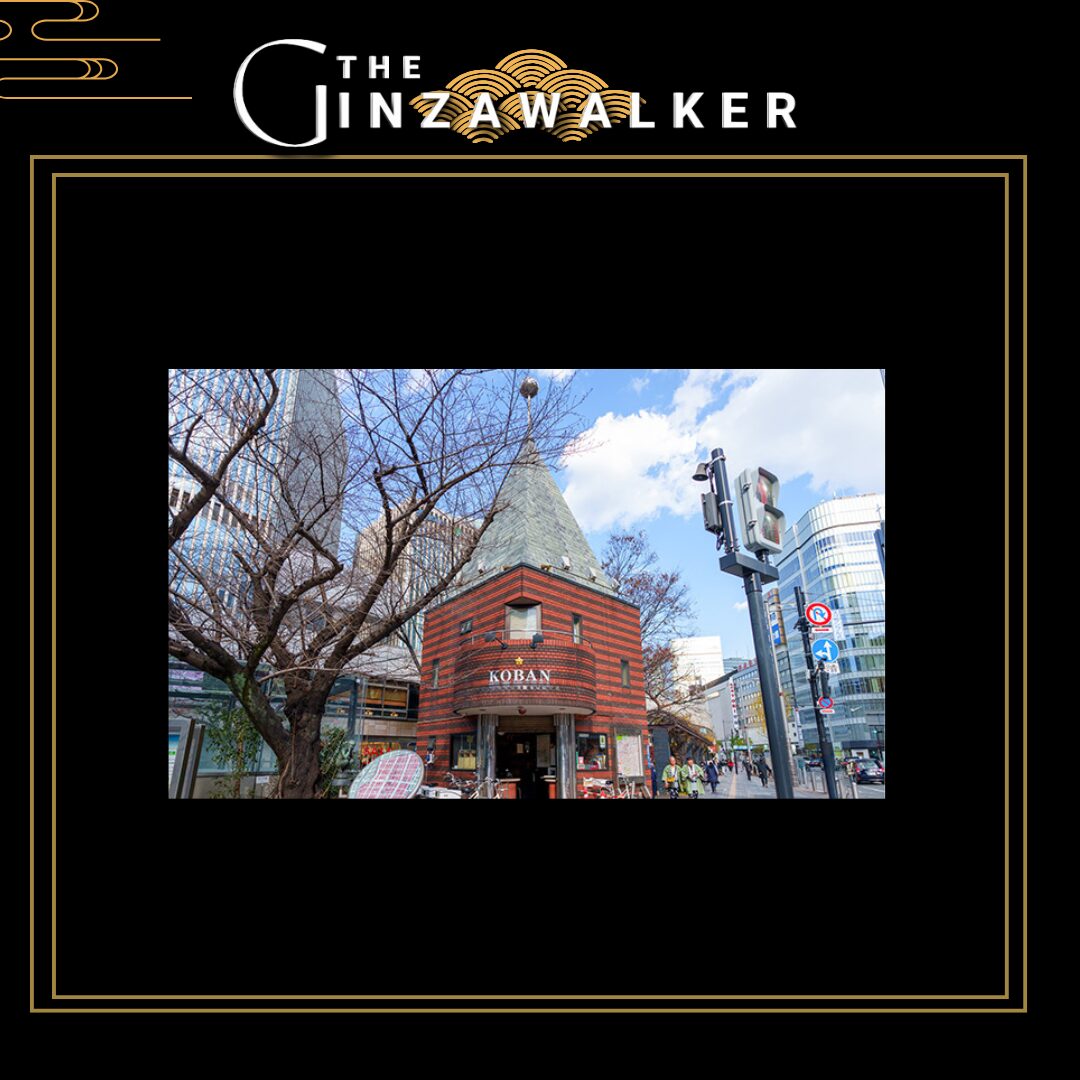
Architectural Outline
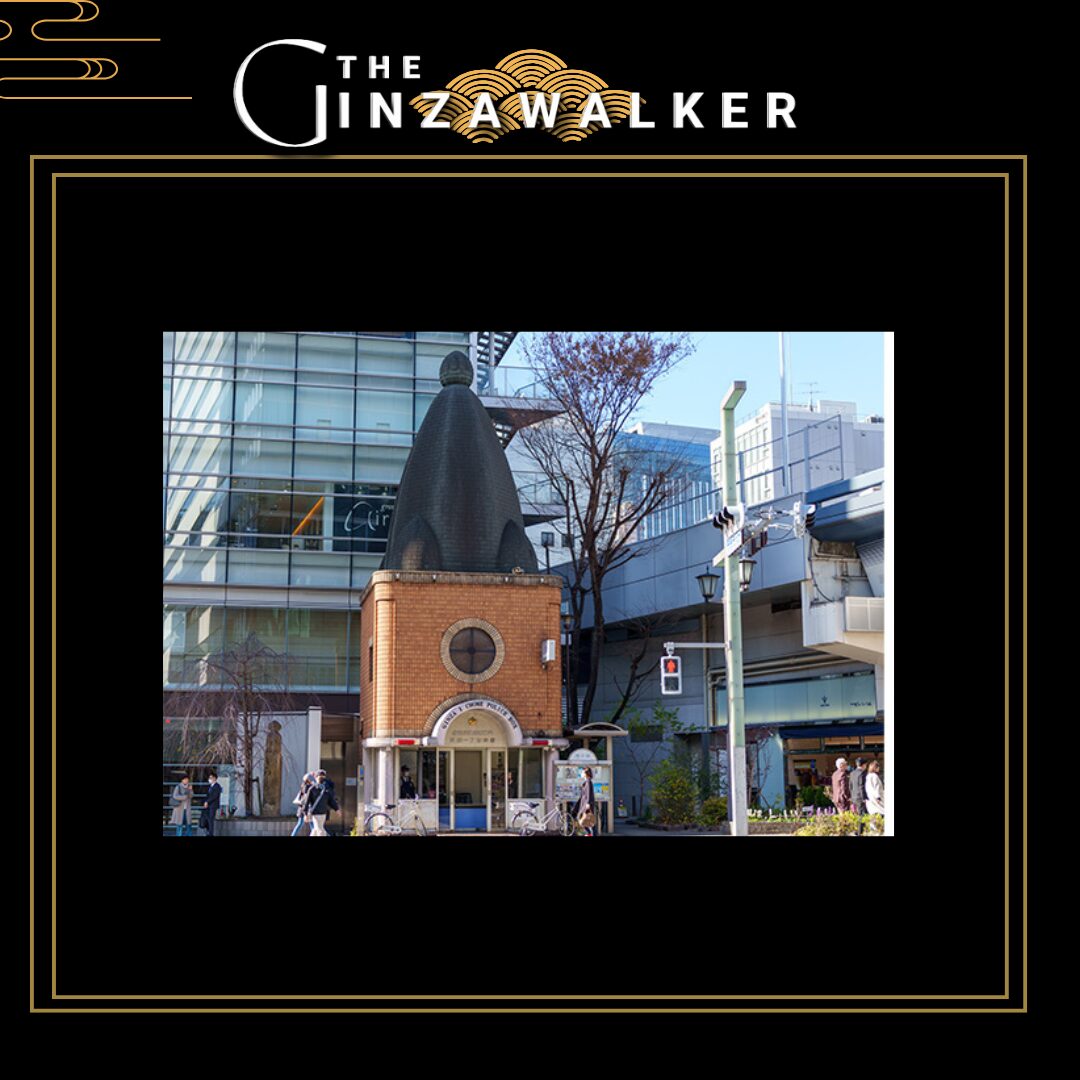
This police box standing at the Sukiyabashi intersection was completed in 1982, designed by architect Kazumasa Yamashita.
The building is characterized by its brick exterior walls and sharply angled triangular roof.
The greatest feature of the design
At the top of the roof,Thin pole with a round sphere on itThe following is a list of the most common problems with the
The Sukiyabashi police box became a hot topic because this design looks like a giant waiting needle stuck in it.
story of one's birth
Initially, another decoration was to be installed in this area, but the deadline for submitting the model was not met,
It is said that when he submitted the image with a waiting needle in his office as a provisional image, the image was officially adopted.
As a result, this coincidenceAn architectural icon representing GinzaThe company has created a
Role in the City
-
Ginza Meeting Spots
-
Standard points for photography
-
A landmark that visually marks the entrance to Ginza
Ginza 4-chome Police Box - “Invisible architecture” reflecting the city”
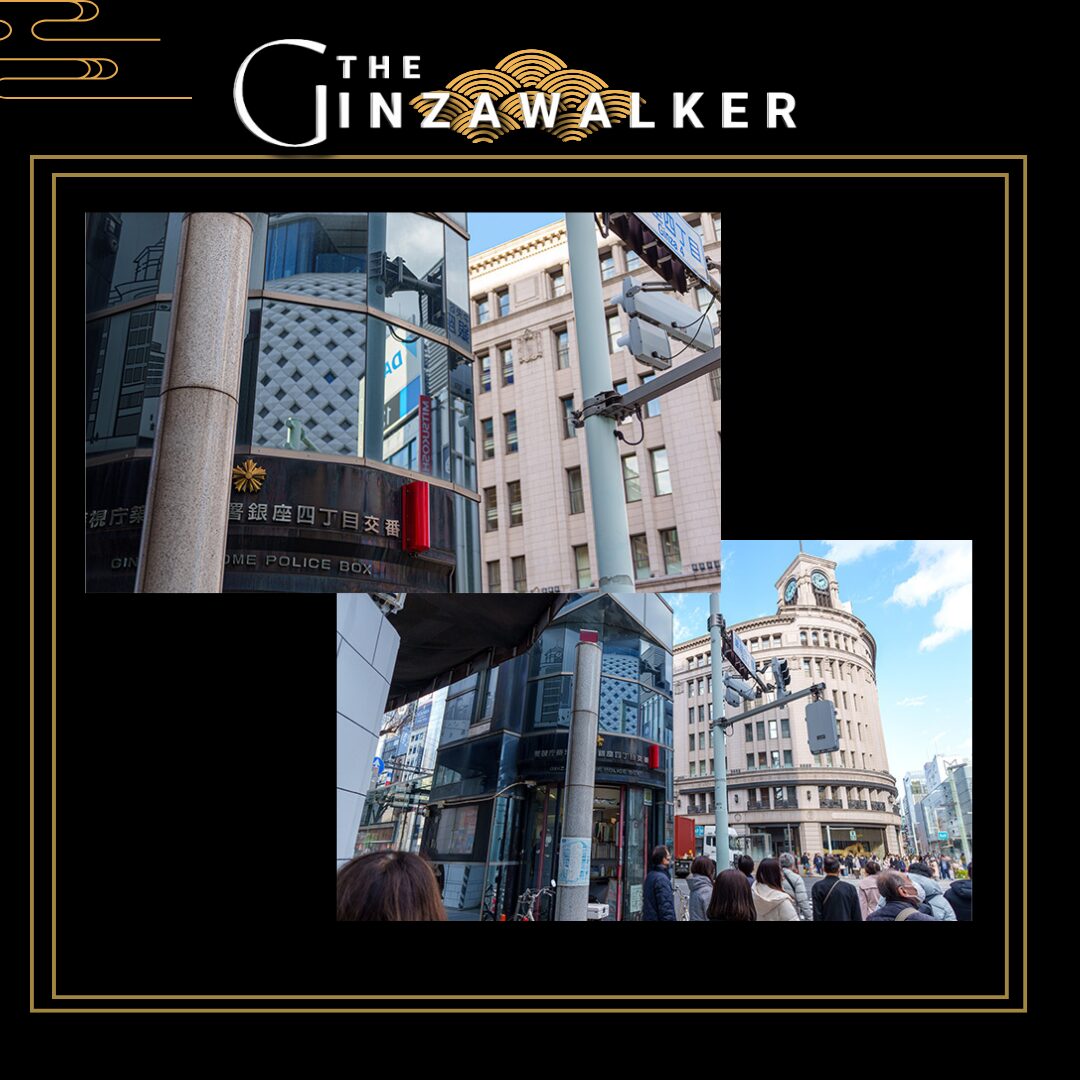
Police box built on a narrow lot
Ginza 4-chome Intersection is one of the most prominent intersections in Japan, where Wako, department stores, and commercial facilities are all crowded together.
The Ginza 4-chome police box is built in this limited sidewalk space.
Meaning of mirror finish
The exterior has a mirror finish on all sides, reflecting the colors of surrounding buildings, people, cars, and even the sky.
By this,
-
Weakens the presence of the building.
-
Reduce pressure
-
Make the entire intersection look wider
and other urban effects.
Architectural Evaluation
This police box is a good example of "architecture that is established by not asserting itself,
They are very suggestive of the relationship between urban landscape and architecture.
Ginza 1-chome Police Box - Roof that holds the memory of Kyobashi
Location and Background
The Ginza 1-chome police box is located near where the Kyobashi River once flowed and Kyobashi Bridge once spanned.
Even today, the parent pillars of the bridge from those days are preserved.
Origin of Roof Design
The roof of the police box was installed on the parent pillar of KyobashiGiboshi-shaped gas lampmotif.
By this design,
-
While it is a modern architecture
-
Visual inheritance of local history
This role is called "the
Fusion of history and architecture
The Ginza 1-chome Police Box is more than just a public facility,
It is a good example of successfully "preserving the memory of the city as architecture.
Ginza Police Box Tour: An Architectural Stroll on Foot
| spot | Approximate time | thing to note |
|---|---|---|
| Sukiyabashi Police Box | Approx. 10 min. | Design and Symbolism |
| Ginza 4-chome Police Box | Approx. 8 min. | Mirror surface and city reflections |
| Ginza 1-chome Police Box | Approx. 15 min. | Kyobashi remains |
The route can be explored on foot in 30-45 minutes and is a very compatible route as part of a stroll through Ginza.
Summary: Police Boxes Speak for The City of Ginza
The three police boxes in Ginza, each with a different design philosophy,
-
Indicates the entrance to the city
-
Blends in with the landscape
-
Inheriting History
This role is called "the
It is because it is the smallest unit of public architecture, a police box,
It is where urban thought and aesthetics are concentrated.
When walking around Ginza, be sure to keep an eye out for these police boxes,
The Story the City Tells UsTry to feel the
Article Supervisor
Yuya Hachimine, CEO

Representative Director of ZENNO GROUP, Inc. known as a leader in the night work industry in Ginza. He worked for 14 years as a black-shirted worker in a high-class club in Ginza, and based on his experience, he provides various services for the industry. In order to improve the inefficient work system, he founded ZENNO GROUP Inc. and has contributed to the development of the industry.
Yuya Hachimine's SNS and related links
- Instagram:. @88.hacci.88
- the Focus: The Interview with Yuya Hachimine
- Laule'a Publications Tsukiyomi of the Wise: A Former Ginza Black Dresser Shares Secrets of the Customer Service Industry
- Local Color: Local Color More about ZENNO GROUP
- GLOCAL.:. ZENNO GROUP Initiatives
- Qualitas Column:Bringing innovation to the glittering "nightlife of Ginza.
- Seaside FM 85.5:Interview with Yuya Hachimine