Right or wrong? He must use only his taste buds to determine whether the dish in front of him is the real thing or a fake—all while sitting in a space that feels like the deep sea, surrounded by massive aquariums. Hachimine took his seat there alongside a hostess from Ginza.
It all started with my quest to redeem myself in the Gochi Battle
It all started with the recent “Gochi Battle.” In that event hosted by YouTuber Rafael, Hachimine took on a high-end Chinese restaurant and finished in third place. Even with his 20 years of experience as a food connoisseur in Ginza, he couldn’t quite reach first place, and that sense of frustration had been strangely lingering.
He wanted to prove once again that he “rarely makes mistakes when it comes to food.” With that in mind, Hachimine invited a hostess he knew from Ginza and decided to head to a certain restaurant. There was no better place to put his palate to the test.
Ueno Aquarium Restaurant Nautilus — An Extraordinary Dining Experience Aboard a Submarine
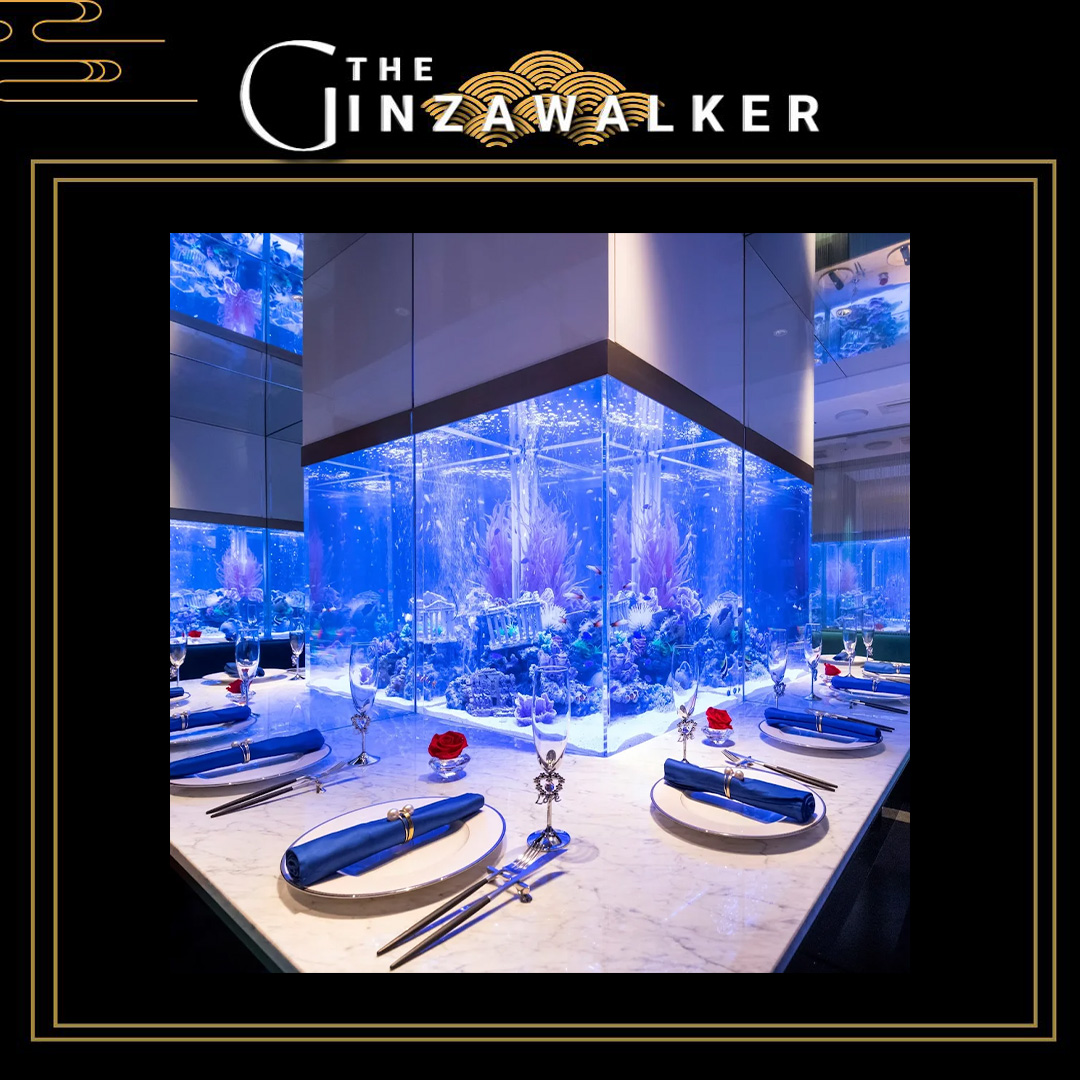
The setting for this story is the “Aquarium Restaurant Nautilus” in Ueno. Inspired by the legendary submarine Nautilus—which actually existed—this restaurant serves creative French cuisine and was designed around the concept of “the Nautilus reborn in the modern era.” It was created by Tetsuya Matsumoto, ranked seventh in the world among interior designers. The marble-adorned interior features entirely private dining rooms, with each table surrounded by a massive aquarium. Dining in a space surrounded by over 1,500 fish feels just like cruising beneath the sea aboard a submarine.
"It kind of feels like we're eating at an aquarium, doesn't it?"
"Not bad. Though I'm just watching the fish."
"Were you planning to eat that?"
One of its defining features is that, while it uses luxury ingredients such as caviar, truffles, and foie gras, it offers them at relatively casual prices. It’s a place brimming with a sense of the extraordinary, often chosen for anniversaries and dates. Even for someone like Hachimine, a regular of the nightlife scene, it was a rather refreshing experience.
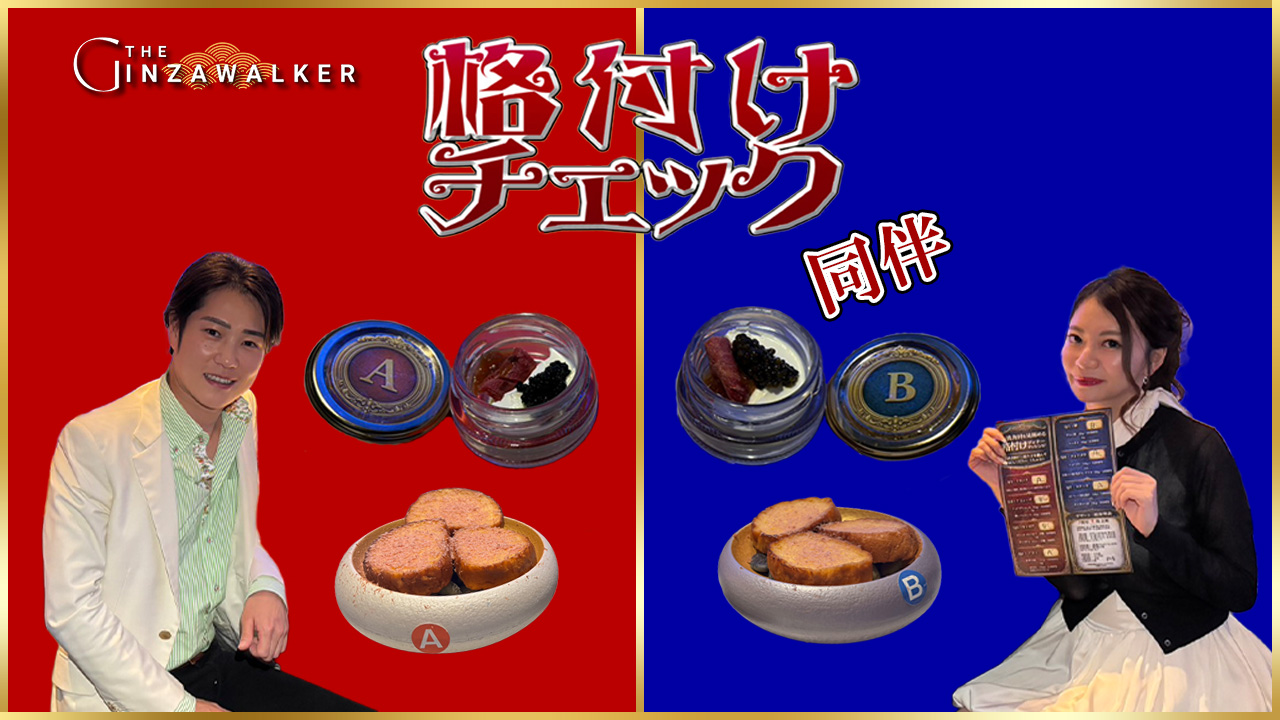
Tonight's menu is inspired by "Rating Check"
One of the unique dining experiences offered at this restaurant is a dinner inspired by the popular TV segment “Rating Check.” The meal consists of seven rounds, each featuring a high-end ingredient and a more affordable alternative that resembles it. Guests must guess which is the real thing, and the final dessert changes depending on how many they get right.
The following seven-match series will be contested.
- drink ── Choose one set from grape juice, whiskey, wine, champagne, or premium wine
- amuse ── Foie Gras Mousse (1 kg, 15,000 yen) vs. Pork Liver Mousse (1 kg, 3,000 yen)
- Caviar ── Osetra Caviar (5,000 yen per jar) vs. Lampfish (500 yen per jar)
- Abalone ── Jade Eyes (1 kg, 10,000 yen) vs. Loco Clam (also known as “Abalone-like Clam”) (1 kg, 2,500 yen)
- 蟹 ── Snow Crab (1 kg, 10,000 yen) vs. Crab Sticks (1 kg, 2,500 yen)
- Foie gras ── Foie Gras (1 kg, 15,000 yen) vs. Just Like Foie Gras (1 kg, 4,500 yen)
- Japanese Black (breed of cattle) ── A4 Japanese Black Beef (7,000 yen per kg) vs. Kangaroo Meat (3,500 yen per kg)
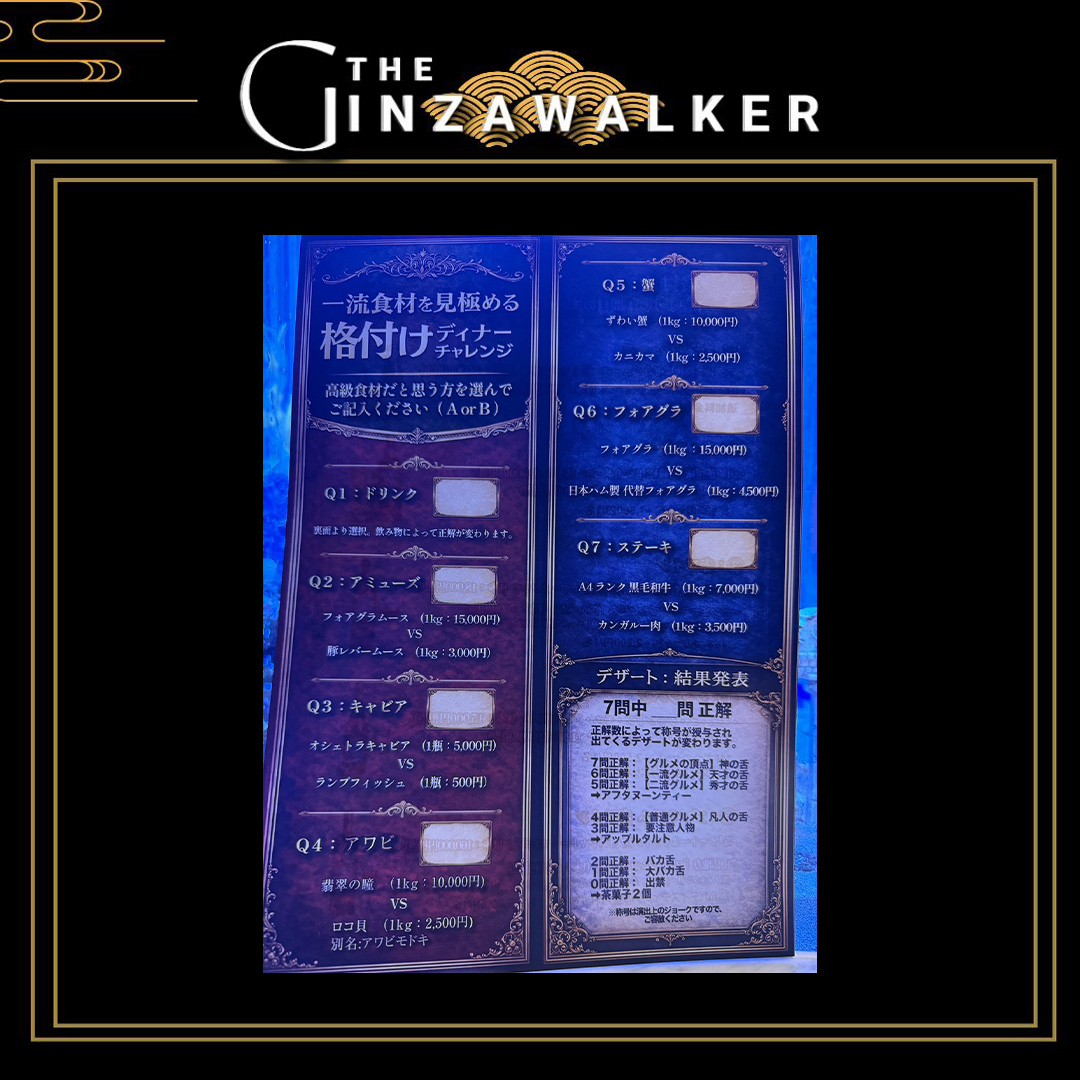
Here are the titles and desserts you’ll receive based on the number of correct answers.
- 5–7 correct answers: Afternoon tea
- 3–4 correct answers: Apple tart
- 0–2 correct answers: 2 pieces of tea-time sweets
It’s pretty mean-spirited that they’ve slipped in some “absolutely unacceptable” items—like imitation crab sticks and kangaroo meat—which would fall into that category on the original “Grading Check” show.
"Have you ever tried kangaroo meat?"
"No. There's no way."
"So, doesn't that mean you can't guess it?"
"You can tell a good one even if you've never eaten it."
"Where does that confidence come from?"
However, it is precisely this unfounded confidence that brings out the true appeal of this project.
Time for the verdict—are you confident in your taste buds?
For Hachimine, who prides himself on having “eaten great food in Ginza for 20 years,” this is his chance to show what he’s made of. He intends to redeem himself here after missing out on first place in the “Gochi Battle.”
"I mean, I came in third on 'Gochi Battle' the other day, too."
"That's not because you guessed it right—it's just the price, isn't it?"
"It's about the tongue."
"I can't see the price today."
The hostess who was with them was also someone who was accustomed to top-class cuisine. The two of them sat down with an air of confidence, as if to say, “This should be a piece of cake.”
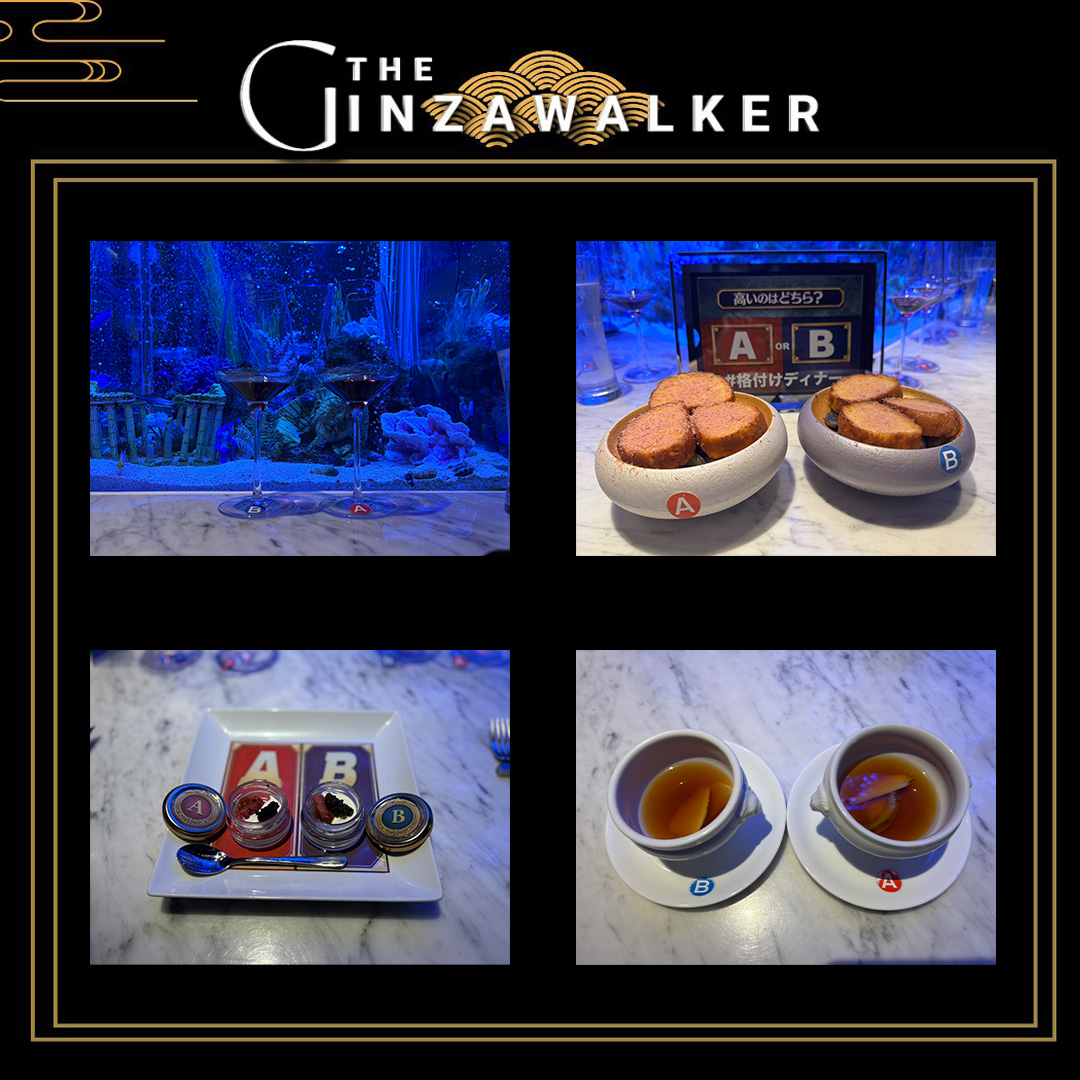
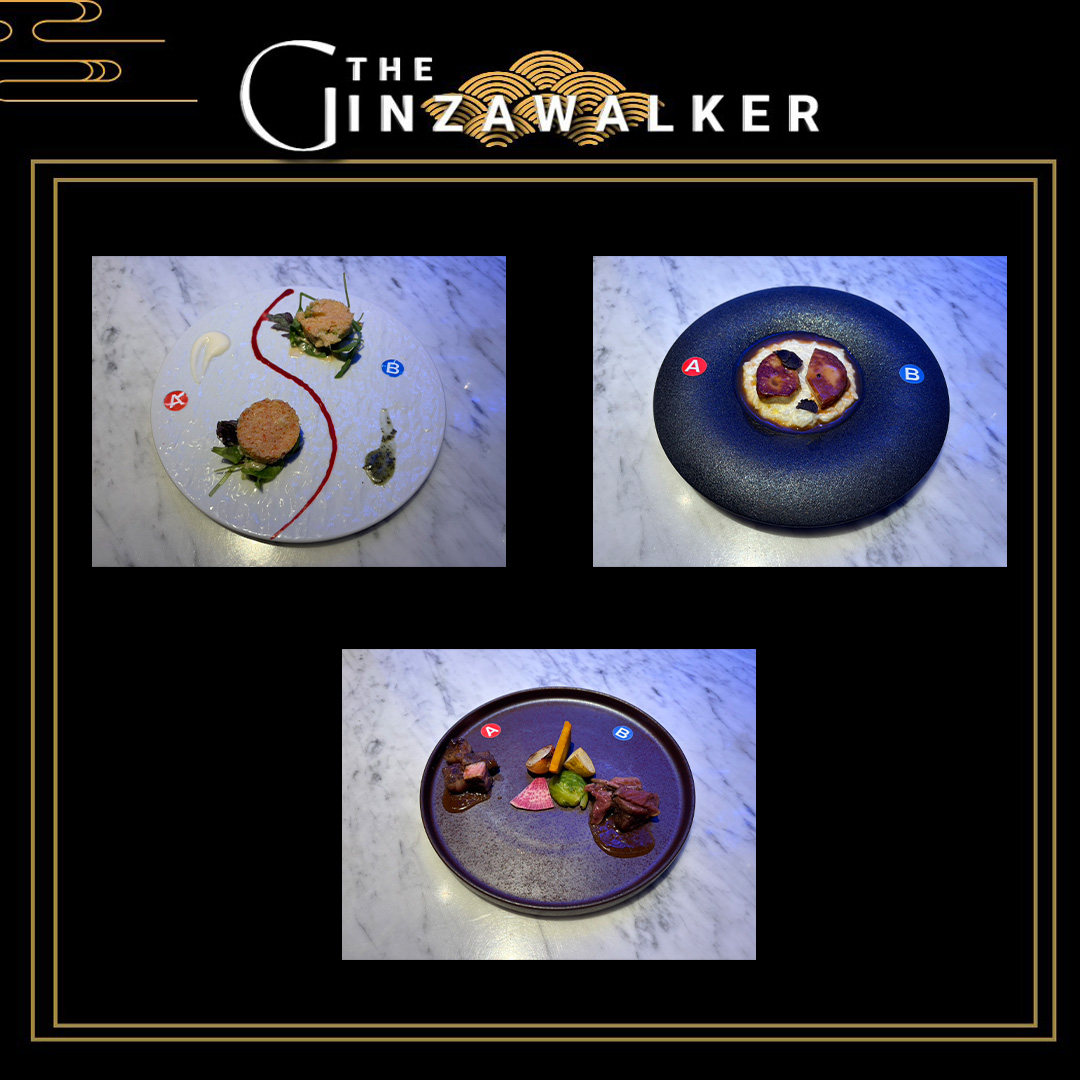
But with every bite, that sense of ease gradually fades away. In this segment, two dishes—one made with the real ingredient and one with the fake—are served simultaneously, plated to look exactly the same. Foie gras and pork liver, caviar and lampfish, snow crab and imitation crab sticks. Since they’re prepared so that they’re indistinguishable by appearance, the only thing you can rely on is your own palate.
"This is the real foie gras. This one's a fake."
"That was a quick answer. Are you sure you're right?"
“...Probably.”
"Why did you say that with such confidence?"
As they took turns bringing the two dishes to their mouths, a look of uncertainty flashed across their faces—as if to say, “Now that you mention it, both of them…” Though they exchanged bold remarks, their expressions grew more serious with each dish. The fish in the tank watched their decision in silence.
Result — I got every question right, of all things
And then came the time to check the answers.
To cut to the chase, both Hachimine and the hostess got all seven questions right.
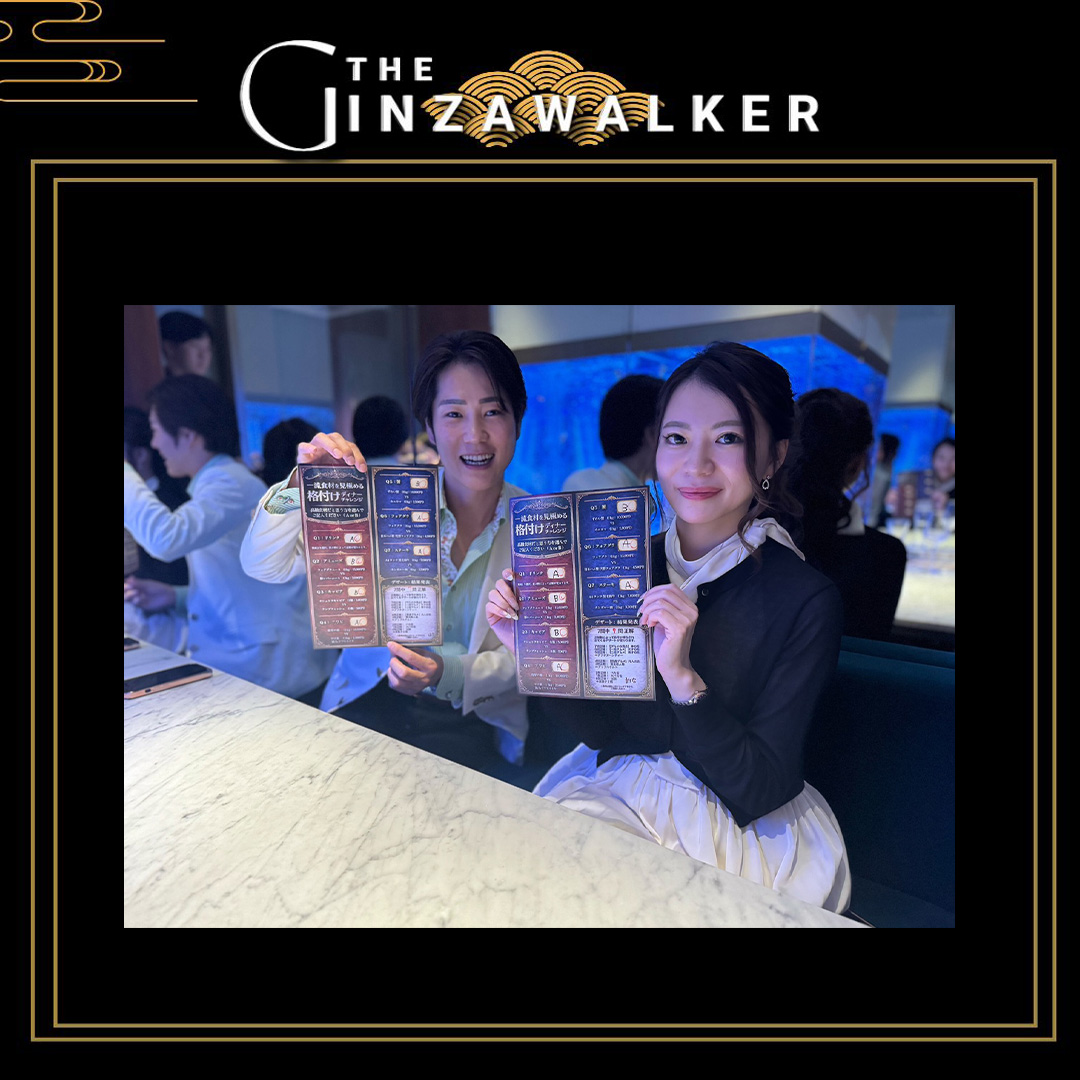
Whether it was foie gras, caviar, abalone, the “crab stick” decoy, or the kangaroo meat trap, the two of them saw right through them all. Even though they’d spent the whole time arguing back and forth—“Which one is it?” “I don’t know!”—in the end, they got every single question right.
"You got them all right, didn't you?"
"I told you. You can tell when someone's a good person."
"Just a moment ago, I was so worried about that."
"I wasn't worrying. I was savoring the moment."
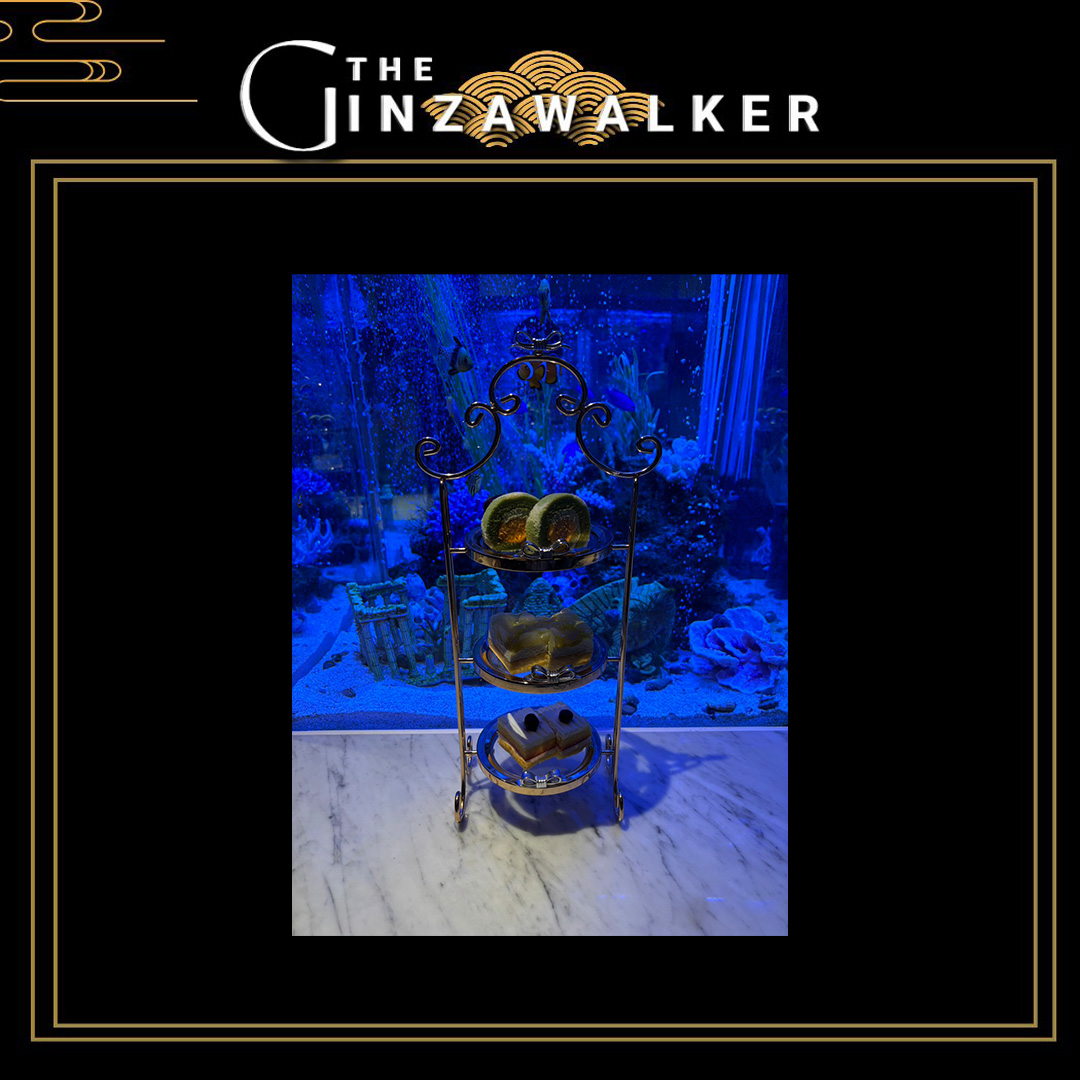
The dish that arrived, earning a perfect score, was the top-tier dessert, “Afternoon Tea.” Standing before the elegant tea stand, the two finally held their heads high. It was a night when they quietly avenged their defeat in the Gochi Battle on a different stage.
Tanabata After Dinner — Writing Wishes on Tanzaku Strips
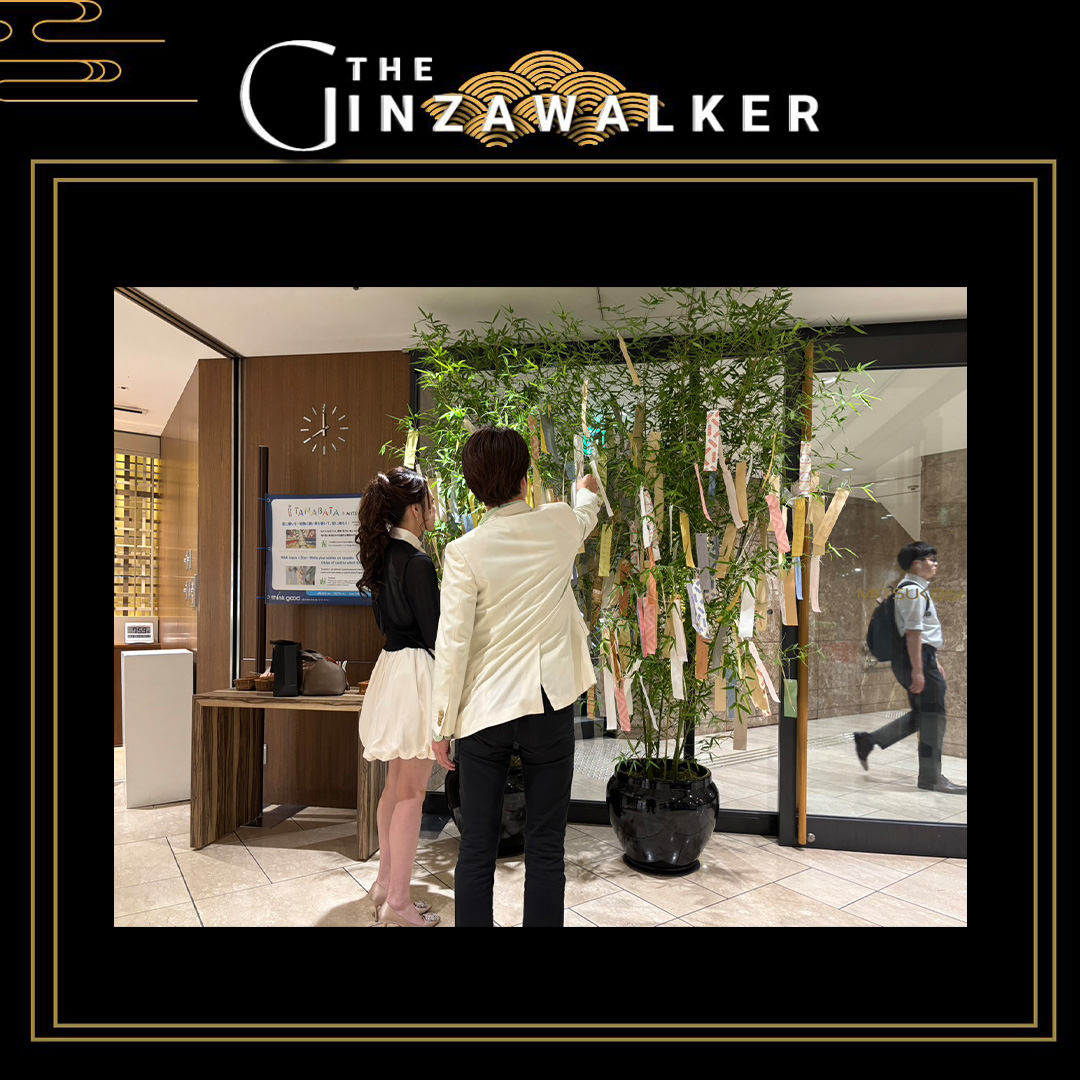
It happened to be Tanabata that day. After we finished our meal and left the restaurant, we noticed a Tanabata bamboo decoration set up nearby. Since we were there anyway, we decided to stop by and write our wishes on strips of paper.
The hostess, who had finished writing first, asked Hachimine.
"What did you write on the strip of paper?"
"I wrote, 'We want to be as close as Orihime and Hikoboshi.'"
The hostess thought for a moment, then smiled and said,
"Well then, let's meet again in a year."
"Why?"
"Orihime and Hikoboshi can only meet once a year, right?"
“...That’s a problem.”
I’ve been neatly tripped up by a premise I came up with myself. Perhaps, before making a wish upon a star, I should have first wished for better judgment in choosing my analogies.
Summary
High-end ingredients and their more down-to-earth counterparts. When placed side by side, they’re clearly different, but when asked to identify them individually, anyone would lose confidence. Still, the fact that they managed to answer every question correctly and win the afternoon tea was likely because Hachimine and the hostess had both continued to encounter the real thing in their respective fields. The frustration of falling just short of first place in the Gochi Battle seems to have subsided for now, entrusted to a perfect evening surrounded by aquariums as deep as the ocean and to the wishes written on Tanabata strips of paper.